


By using our website, you agree to the use of cookies as described in our Cookie Policy
Blog
The main ingredient: Big cheese buying strategies for food manufacturers
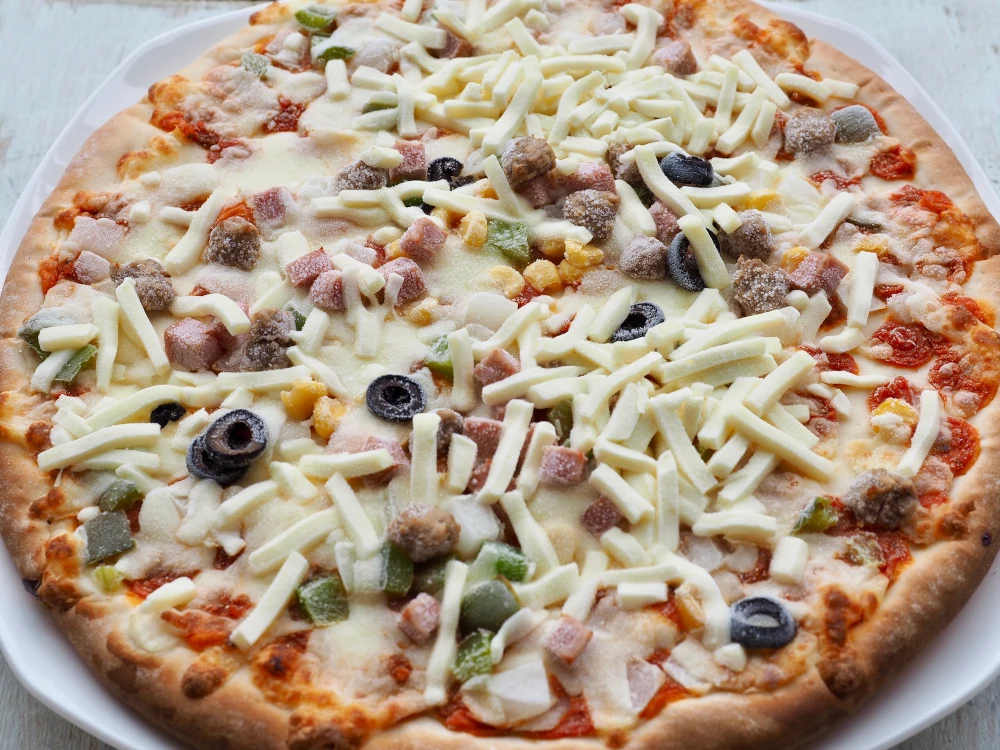
For many food manufacturing companies, cheese is right at the top of the ingredient list. Brands such as Amy's Kitchen, Newman’s Own and Trader Joe’s have built empires on mac and cheese, cheese enchiladas, artichoke cheese dip and four-cheese pizza.
These aren’t your grandpa’s frozen dinners.
They sell dozens of flavor-forward SKUs built around mozzarella, cheddar, jack, provolone, parmesan and fontina, all doing very different jobs in very different dishes.
Add a nice cheddar cheese sauce and you can even sell tons of broccoli!
Cheese typically represents 40 to 60% of the cost of all ingredients in a frozen pizza. And of course, margins are slim for any food item. So buying the right cheese, at the right price, in the right form is a mission-critical exercise.
Unfortunately, many manufacturers still buy cheese like it's a line item on a spreadsheet… an accounting problem instead of a delicious differentiator.
They try cutting costs with pre-shredded bags of cheese coated in anti-caking agents like cellulose powder or potato starch. What they get is a grainy, plastic-like texture when the dish is microwaved or baked.
They buy to cover their immediate needs, without fully vetting all the options or the unexpected consequences of their cost-cutting measures.
Historically, the price of cheese has been quite volatile. Prices can swing up to 50% within a single year as they did in 2020, according to CME/USDA Dairy Market News.
That leaves manufacturers exposed. But with a Channel Ambassador working for you, watching the trends and assessing your overall portfolio in the long run, that risk can be reduced dramatically.
That's the difference between a Channel Ambassador’s approach and a transactional approach.
Most vendors will happily sell you the block of cheese you need this week, or a pallet for next week. A Channel Ambassdor studies your business, knows the world market, and projects volume and pricing that ensures long-term success.
At Ambassador Foods we can start small and scale up with you, like we did with Sanguich. Because once you commit to a flavor and a format, you’ll need a supply chain partner who sticks with you when you get big and graduate to containers.
Cheese buying tips for food manufacturing companies…

Select your cheese for maximum gooey melt: Use low-moisture, whole-milk mozzarella, Fontina, Monterey Jack, or Gouda. These cheeses have the perfect fat-to-moisture ratio to yield a luxurious, stretchy pull over frozen lasagna, enchiladas, or bowls.
Select your cheese for maximum flavor impact: Use Aged White Cheddar, Gruyère, or Provolone. These varieties possess complex flavor notes that easily cut through the bland or overly salty flavor profile of frozen food stand-bys. With our Ammerlander options you can do a mix… adding flavorful fontal to the standard mozzarella for much better flavor.
Select your cheese for crispy textural crusts: Dry, hard cheeses feature minimal moisture, allowing them to brown into a perfect, crispy crust under a broiler or air fryer. Try Asiago, Parmesan, or Pecorino Romano.
Select your cheese for format efficiency: Every food production operation is different, and you need a cheese format that fits. Dairies don't produce grated cheese, they produce big blocks. So whatever format you need, whether it’s shredded for a pizza line, sliced to a precise thickness for a sandwich line, portioned into loaves sized for a specific piece of equipment, it has to be engineered somewhere
Take Ammerlander, for instance. Our flagship imported German cheese isn't one product line, it's a comprehensive set of flavors, formats and solutions built for all sorts of food service operations and manufacturing companies.
4x4 sliced sandwich loaves are built for high-speed sandwich lines or high-volume cheeseburger production.
4x6 loaves of Ammerlander Swiss is the prized cheese that Sanguich restaurants use in their award-winning Cubano sandwiches.
33-pound Euro blocks, available in any Ammerlander variety, work well for manufacturers who need volume and want to control their own processing.
While our business in retail cheese distribution has been growing rapidly, it’s manufacturing that accounts for much of the worldwide consumption of cheese.
Industry research shows that over two-thirds of the cheese consumed in the U.S. is devoted to food service and food manufacturing. Ready-to-eat meals, bakery applications and fast-food production are the fastest-growing segments.
This isn't a niche, it's a massive supply chain and a thriving entrepreneurial environment. Never have there been so many companies producing such a wide variety of cheese-rich foods.
Manufacturers use enormous volumes of cheese. So do sandwich makers, bakeries and charcuterie companies — and the market for all of them is only getting bigger.
What none of those companies need is another distributor who treats cheese as an interchangeable commodity, quotes a price per pound, and calls it a day.
What they need is a channel partner who knows cheese like a sommelier knows grapes.
That's the piece of the supply chain Ambassador Foods owns. We're experts in the cheese business. We understand formats, fat content, flavor profiles and performance characteristics.
And we match those with what a manufacturer's line actually requires before the cheese ever arrives. So they can produce the best possible product, at the best possible price.
Ambassador Foods is a Hollywood-Florida based specialty food company with a category-busting, Channel Ambassador business model. The company’s contrarian approach combines the network of a broadline distributor with the marketing savvy of the best brokers, the smarts of a consultancy and the buy-in of a wholesaler. For more information, contact us here. Email Contact:
‹ Back
Recent Posts
-

No Magic Required: How Channel Ambassadors Help You Skip The Drama
October 22, 2026
-
Uncommon Foods That Sell - And Pay
October 9, 2026
-
-
Now you see it, now you don't!
September 5, 2026
-

Thinking Sideways. Moving Forward.
September 3, 2026