


By using our website, you agree to the use of cookies as described in our Cookie Policy
Blog
Specialty foods vs commodity items…

Two different supply chain challenges.
The term "wholesale specialty foods" is commonly applied to many companies that look a little like Ambassador Foods. And on the surface, that makes sense.
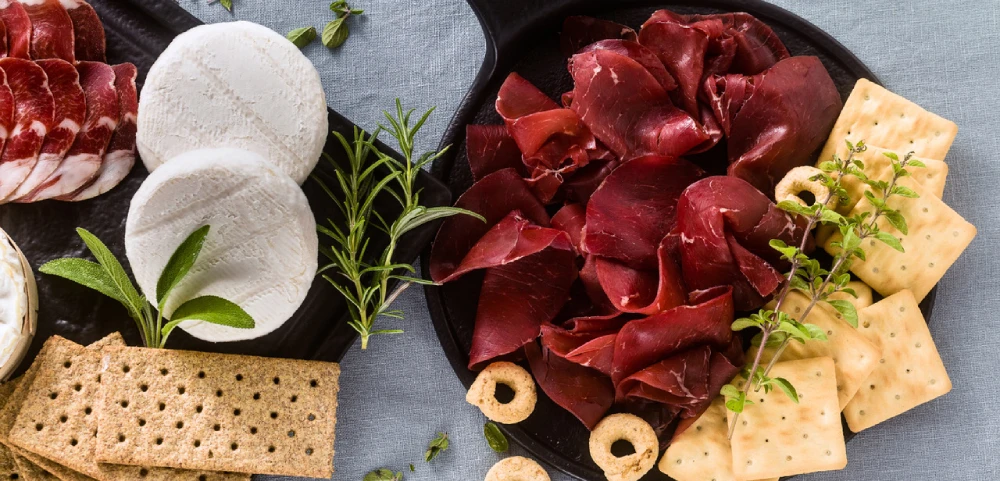
Picture the floor of the Fancy Foods Show: Ambassador Foods might show chili-fig cheese on an elaborate charcuterie board. Uruguayan Bresaola beef. Or lavender-infused olive oil imported from France.
Those are the products that live outside the normal realm of most food service operations. They are the special-occasion items that make a menu memorable, or a gift basket feel like an event.
That's specialty food in its most obvious form. But Channel Ambassadors offer a much bigger universe of options.
Channel Ambassadors also handle high-volume items that most people would consider "commodities," like whipping cream, olive oil, coffee and cheese. Nothing exotic about any of those, on paper.
However, it's the careful choice of an extraordinary "commodity" item that often separates one food service operation from another. One cruise line from another. One brand of frozen entrées from another. One restaurant from another.
It’s the “house” coffee in a boutique hotel. The butter that a bakery uses in its delicate pastries. The cheese that a sandwich shop melts between two slices of bread. None of these items are rare, but all of them can be the difference between a flop and an unforgettable meal.
A simple sandwich proves the point… Sanguich de Miami is a Florida restaurant chain built around one item: the Cubano. It’s a sandwich you can find at a thousand cafes in the area, and yet Sanguich has earned Michelin's Bib Gourmand distinction — the award for exceptional food at a great price.
Nothing about a Cubano is exotic. What makes theirs different is the ingredient sourcing and the execution: house-cured ham, slow-marinated pork, and the best swiss cheese from Germany. It’s a commodity sandwich, elevated into something decidedly uncommon.
Two types of products, two very different channel management challenges
Here's where it gets interesting for anyone managing a supply chain in the food industry: high-volume commodity items and true specialty items aren't just different product categories. They create entirely different supply chain challenges. Treating them the same way is asking for trouble.
Volatility vs. scarcity.
Commodities like cheese, cream, and coffee are exposed to global price swings that have nothing to do with quality. Cheese prices alone have moved as much as 50% within a single year, according to CME/USDA Dairy Market News.
A Channel Ambassador managing the supply of a commodity has to watch world markets, project volume, and build pricing strategy for the long run, not just quote whatever the price happens to be this week.
Specialty items face a different risk entirely: scarcity.
Lavender-infused olive oil from a small French producer or traditional beef bresaola from Uruguay doesn't involve a commodities index. They hinge on harvest size, production capacity, processor timing and how many other buyers want the same product.
The channel problem isn't price volatility; it's securing allocation before someone else does. You need a channel partner that has the connections to make that happen.
Format engineering vs. storytelling.
With commodity items the channel work is often about format and function. A dairy doesn't produce shredded cheese, it produces blocks. Somebody has to engineer that block into a usable form, matching the raw commodity to exactly what a customer requires. A chain of sandwich restaurants has much different needs than a pizza manufacturing company.
Specialty items require a different skill set. The product usually arrives finished, so the chili-fig cheese doesn't need reformatting, it needs a story. Specialty channel work leans on marketing, positioning, and getting a genuinely unusual product in front of the right buyers who'll pay for what makes it special in the first place.
Continuous replenishment vs. relationship-building from scratch.
High-volume commodity items are a natural fit for Just-In-Time inventory management. Tight, continuous replenishment keeps cash from getting tied up in a warehouse full of whipping cream nobody's using yet.
That system depends on deep, established supplier relationships and real-time visibility, built over years of moving predictable volume.
Specialty items rarely have that luxury out of the gate. A new charcuterie brand or an emerging import doesn't have fifteen years of order history to smooth out its logistics. The channel work is relationship-building from a standing start and proving reliability before volume exists, not optimizing flow after it does.
Margin math is inverted, too.
Margins are notoriously thin on commodity items. The Channel Ambassador value shows up in basis points: better sourcing, better format efficiency, fewer middlemen, and small savings that compound at scale.
On a specialty item the margin often exists precisely because the product is hard to find. So a Channel Ambassador's value is in access and credibility, not incremental cost savings. Getting a small, ultra-premium producer onto a menu can be a high-value differentiator.
The best channel partners don’t just pick a lane, they remain flexible. And flexibility is a hallmark of a true Channel Ambassador.
The job is knowing how to run tight, JIT-style logistics on the commodity side, while simultaneously chasing down the next great specialty item before a competitor finds it first.
Ambassador Foods has scaled with customers on both ends of that spectrum — from sourcing the Ammerlander Swiss that goes into Sanguich's award-winning Cubano, to helping a charcuterie startup build a nine-figure business one board at a time.
Wholesale specialty food isn't only about what's unusual. Sometimes it's about what's ordinary, done extraordinarily well. Either way, the channel management looks completely different when you have a Channel Ambassador on your side.
Need an ingredient nobody else can find, or a supply chain partner that has a real person behind it? Get in touch with Ambassador Foods and let a Channel Ambassador go to work for you.
‹ Back
Recent Posts
-

No Magic Required: How Channel Ambassadors Help You Skip The Drama
October 22, 2026
-
Uncommon Foods That Sell - And Pay
October 9, 2026
-
-
Now you see it, now you don't!
September 5, 2026
-

Thinking Sideways. Moving Forward.
September 3, 2026